
Autohaus Götz Bad Kissingen, Bayern, Deutschland
HEATING 2,000 M³ WITH 2,000 LITRES OF HEATING OIL PER WINTER?
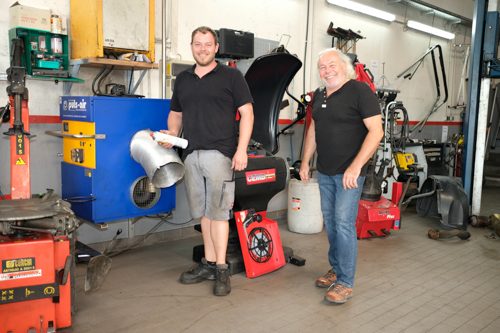
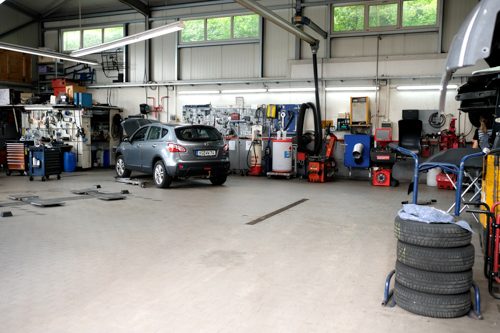
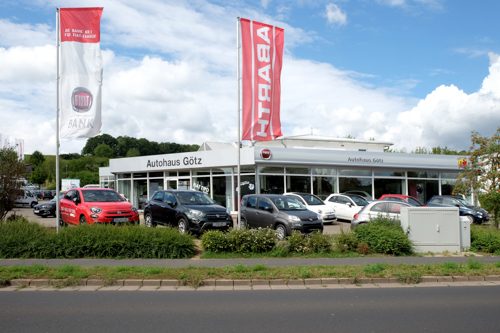
In a telephone interview in summer 2020, Günter Götz, owner and master automotive technician, describes his experience with the Puls-air heater from Austria.
Autohaus Götz, located in Bad Kissingen since 1995, was founded in 1985. In 2009, the workshop was extended by approx. 340 m² and now has 6 workstations for 15 employees. The company has specialised in the Fiat, Nissan and Abarth brands. Workshop management has already been taken over by the owner’s son, who is already very well integrated into the family-run business.
Conversion = new heater
Due to the conversion of the workshop and office in 2009, Mr Götz had to think, among other things, about how to keep the new premises warm in winter. The old premises were heated with hot-water fan heaters (ceiling fan heaters), which, according to owner Mr Götz, could not get the heat down to the workstations, so a lot of energy was wasted. “With ceiling fan heaters, you don’t just pay for gas, but also for electricity. This combination leads to considerable costs,” says Mr Götz. The explanation for the warm air from ceiling fan heaters not reaching the workers below is a simple physical principle: warm air rises, so heat is distributed at head height and not at foot level, where the employees need it. Puls-air heaters stand on the floor of the room to be heated and can therefore make use of the thermal rolling air circulation effect. This saves heating costs and increases efficiency. The reasons for Puls-air’s efficiency:
- Efficiency of 97% thanks to the patented pulse combustion,
- The thermal rolling air circulation generated by the unit and
- The physically correct positioning of the unit on the floor of the room to be heated
Heating costs halved
In the interview, Mr Götz repeatedly mentions the high “energy efficiency” as the main advantage of the Puls-air workshop heater. He found it plausible that the efficiency of the unit must be high if the emission values are so low. And it is true. In recent winters, Mr Götz has used an average of 2,000 litres of heating oil, which at a heating oil price of approx. 0.6 euros per litre amounts to approx. €1,200. And that, mind you, for 2,000 cubic metres. The company boss confirms that the costs with ceiling fan heaters were twice as high. Mr Götz heats his workshop to between 18 and 21 degrees. On nights below 0 degrees, he leaves the heater running at 7 – 8 degrees. In the morning, his workshop is warm within 30 – 50 minutes, depending of course on the outside temperature and on how often his 4 doors open and close.
Commissioning? “Child’s play”
“Very simple”, “Child’s play”, “No problem at all”. These are the key words Mr Götz used in response to the question: “How did the commissioning of your heater go?” The owner connected the heater to an existing heating oil tank via a copper line, routed the exhaust gas outdoors over the roof via a 35 mm stainless steel pipe, connected 230 V power, and the heater was ready for operation. Since Mr Götz put the system into operation 7 – 8 years ago, it has been running without any faults for over 10,000 operating hours. He finds it particularly pleasant that maintenance costs are minimal and that the unit does its job reliably and steadfastly. Mr Götz recommends Puls-air not only to workshops but generally to all businesses that have premises to heat in which people work.
Puls-air in 3 words
“Describe the Puls-air heater in 3 words:”
Mr Götz: “Square – simple – good”
More references
More businesses that heat with Puls-air
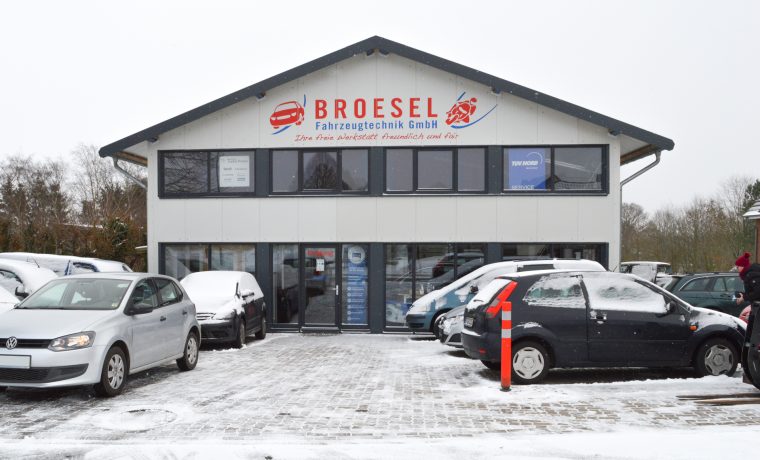 Broesel Fahrzeugtechnik GmbH Gokels, Schleswig-Holstein, Deutschland
Germany
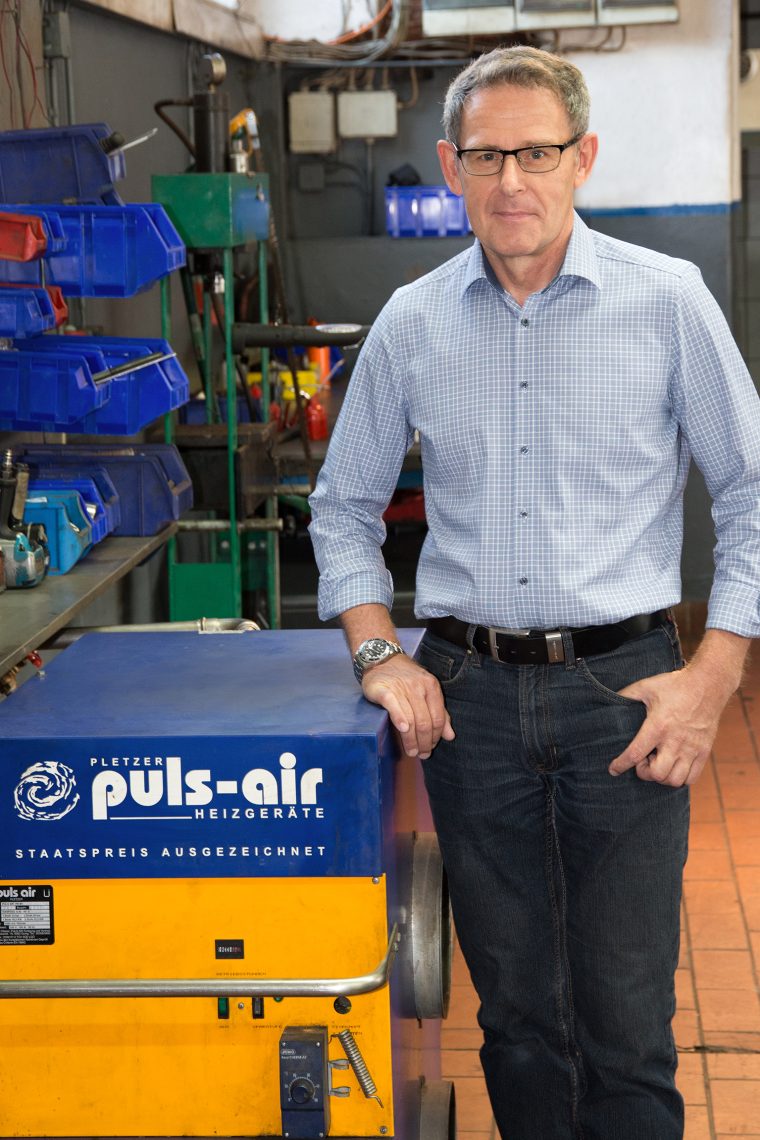 Autowelt Weiden in der Oberpfalz, Bayern, Deutschland
Germany
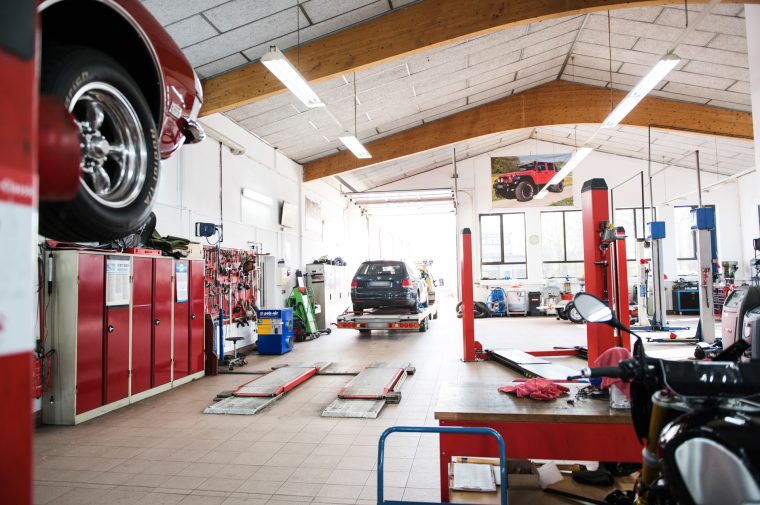 Autohaus Kopp e. K. Edling, Bayern, Deutschland
Germany
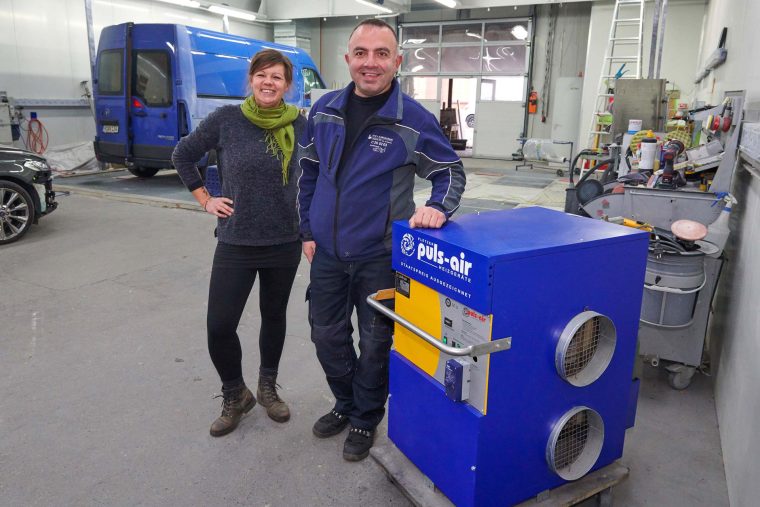 Kfz & Karosserie Kawalek Hannover, Niedersachsen, Deutschland
Germany
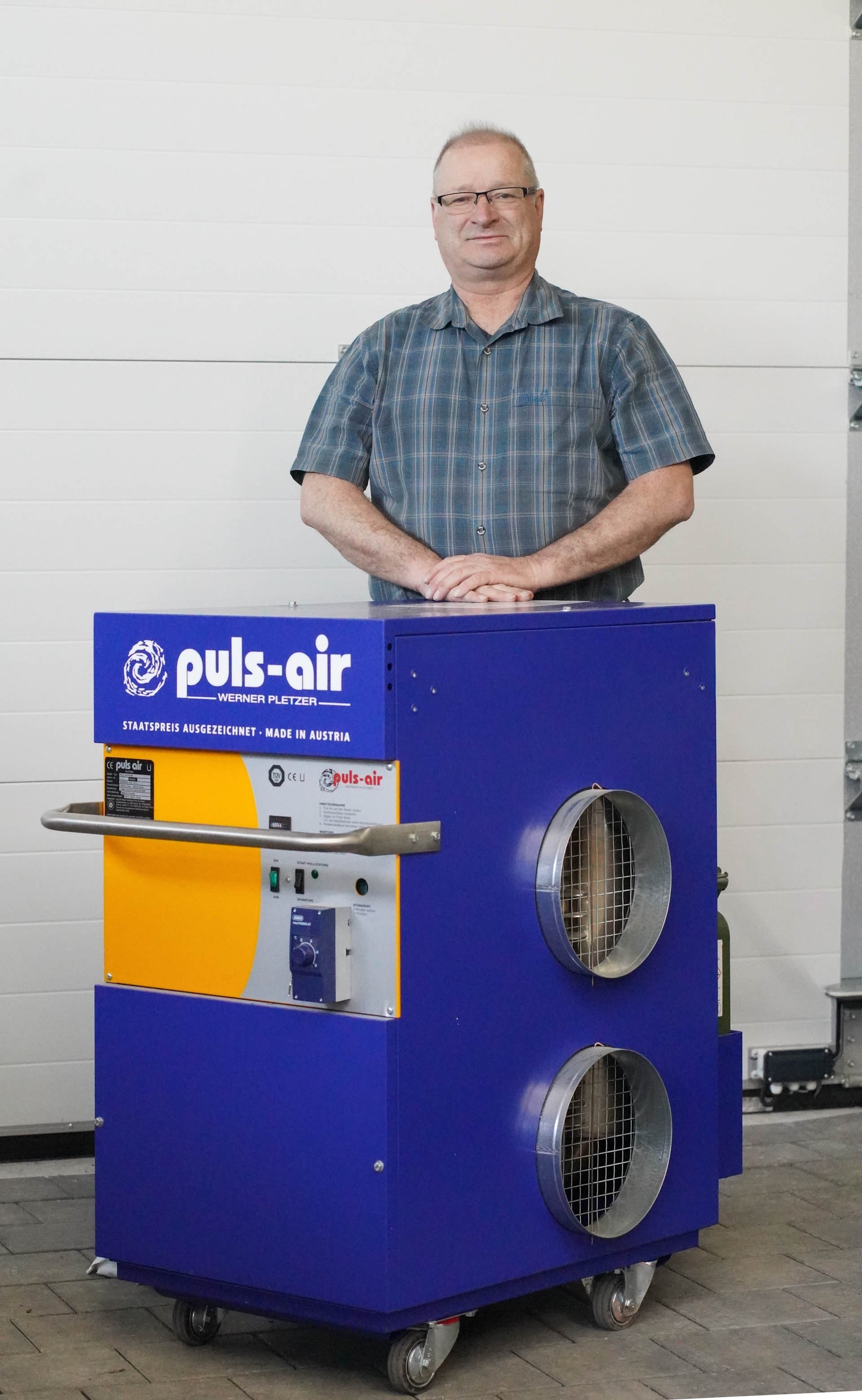 Northwest Sàrl, Luxemburg
Luxembourg
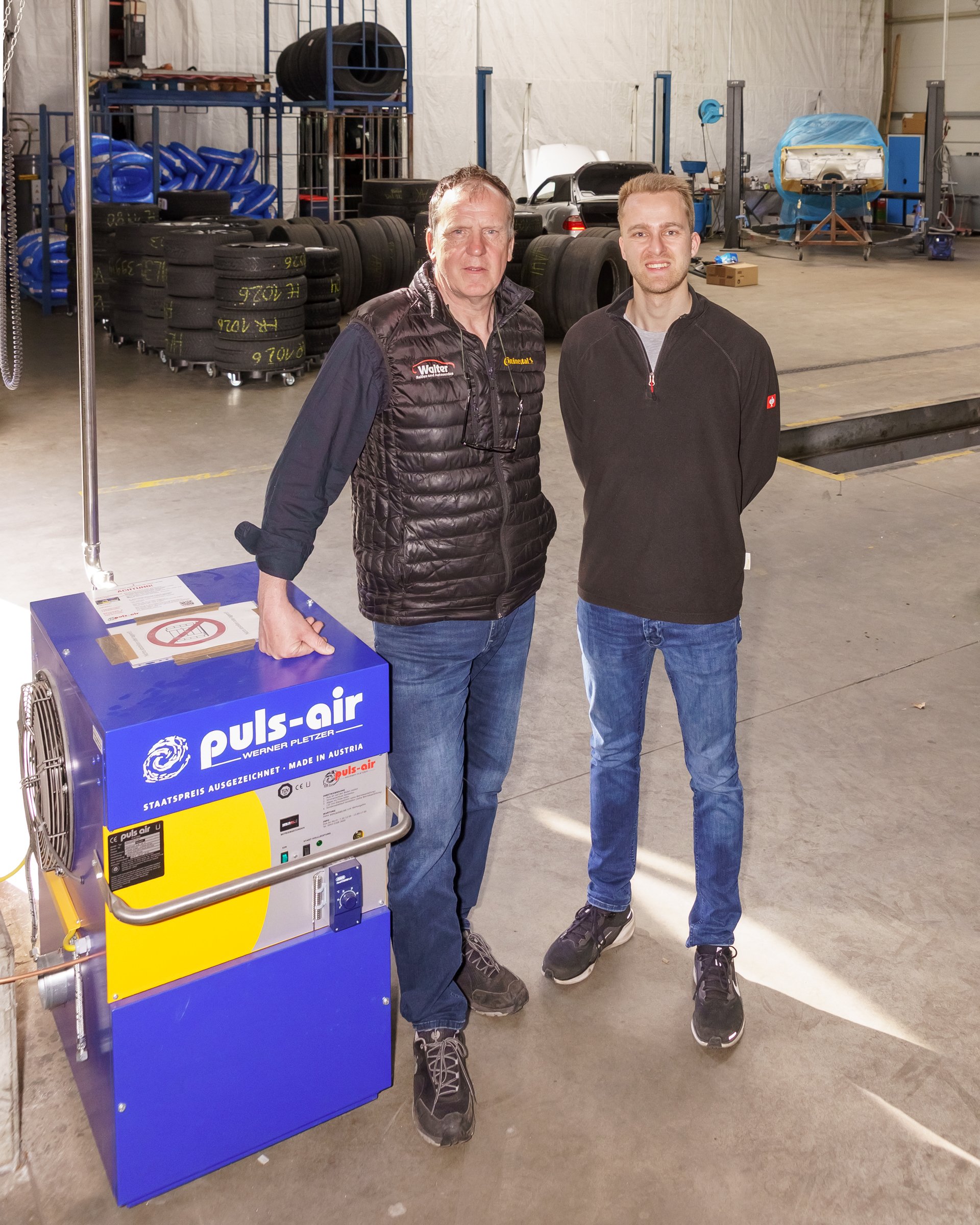 Autoservice Walter im bayrischen Hilpoltstein, Deutschland
Germany


